


Introduction: The Shift Toward Mobile-First Maintenance
Over the past ten years, maintenance operations have changed significantly, mostly due to the widespread use of mobile technologies. Conventional maintenance models have little visibility into field operations, a heavy reliance on paper-based routines, and delayed reporting. Mobile maintenance apps are revolutionizing how technicians engage with teams, assets, and data in real time. These sophisticated platforms interface with enterprise systems and facilitate data-driven decision-making, going beyond simple digital checklists. Mobility is now a key component of contemporary maintenance methods as firms embrace Industry 4.0 ideas. Organizations now see mobile-enabled technicians as essential resources for attaining operational excellence and cutting downtime.
The Evolution of Field Service Technology
From simple computerized maintenance management systems (CMMS) to complex mobile-first ecosystems, field service technology has advanced. Early systems operated only on desktop computers, requiring technicians to return to a central site to update records. This led to inefficiencies and frequently produced incomplete or out-of-date data. By enabling technicians to access and update data straight from the field, mobile maintenance apps close this gap. These apps guarantee continuity even in remote locations thanks to features like cloud syncing, offline capabilities, and user-friendly interfaces. The integration of IoT and AI enables predictive maintenance and automatic notifications. This development is part of a larger trend toward agile, decentralized maintenance operations that put accuracy and speed first.
Key Features That Empower Technicians
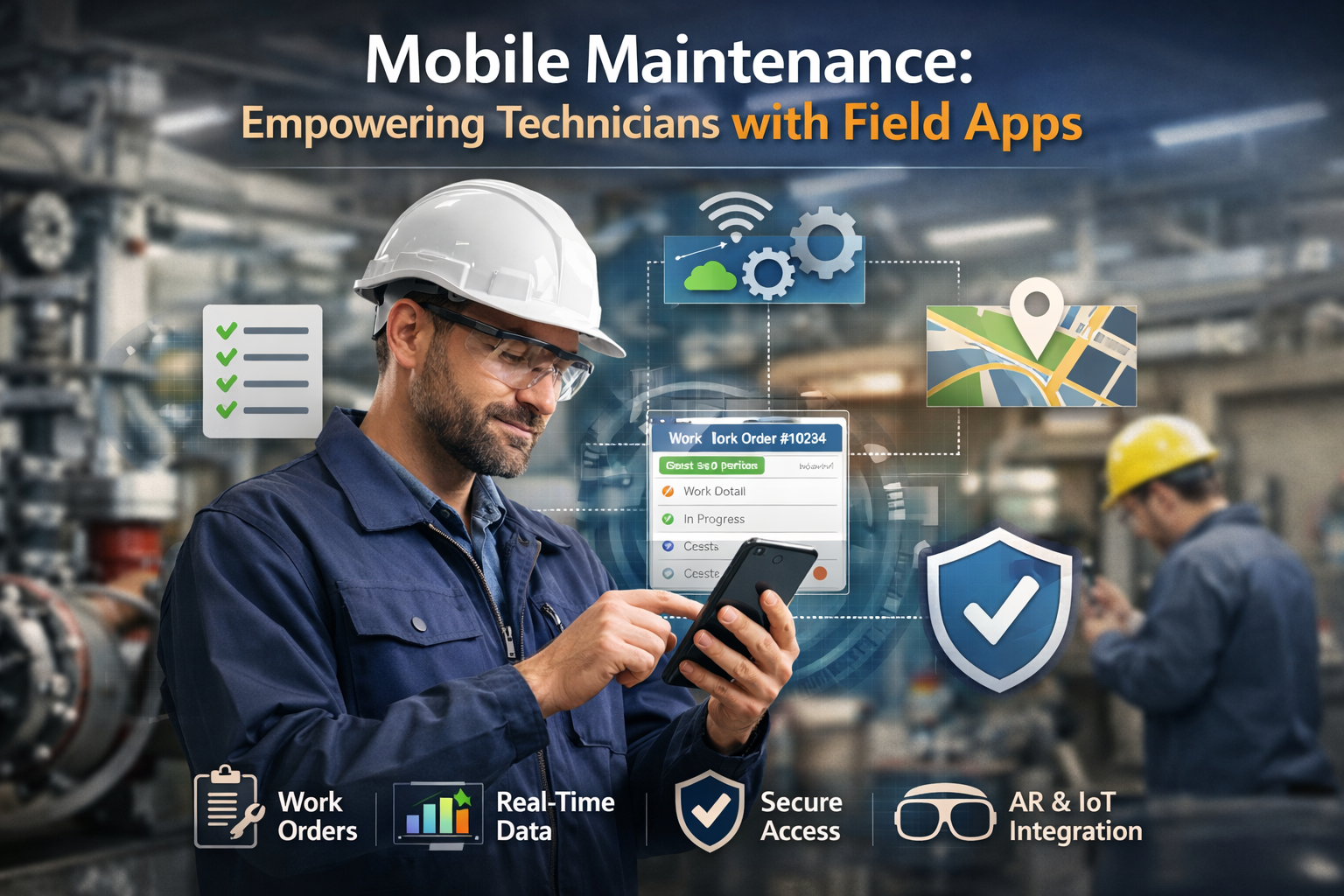
Contemporary mobile maintenance apps offer a variety of features that increase technicians’ efficiency and productivity. Real-time access to asset history, manuals, and maintenance logs enables technicians to make informed decisions on-site. Teams can quickly assign, modify, and close tasks, making work order management seamless and efficient. Numerous applications use augmented reality (AR) tools to help technicians navigate difficult processes, which eliminates the need for in-depth training. Technicians may effectively organize their schedules by using GPS and route optimization tools, which reduce travel time and fuel expenses. Furthermore, integrated communication mechanisms enable immediate cooperation with specialists and supervisors. Together, these qualities enable specialists to carry out their jobs with more assurance and accuracy.
Improving Operational Efficiency and Accuracy
By removing unnecessary procedures and lowering human error, mobile maintenance applications greatly increase operational efficiency. Mobile devices allow technicians to rapidly capture data, including voice notes, photographs, and videos, which improves documentation quality. The accuracy and timeliness of maintenance records are guaranteed by this real-time data collection. Automated workflows minimize administrative costs and expedite approval procedures. Analytics dashboards also give managers useful information about performance indicators like asset utilization and mean time to repair (MTTR). Organizations may enhance their maintenance strategies and make better judgments by increasing the accuracy and accessibility of their data. A more responsive and effective maintenance operation is the outcome.
Challenges in Adoption and Implementation
Adoption of mobile maintenance apps is not without difficulties, despite their benefits. Resistance to change among technicians used to conventional workflows is one of the main obstacles. To guarantee successful adoption, organizations must make training and change management program investments. Integrating mobile apps with current enterprise systems can be difficult and resource-intensive. Data security presents another major challenge, especially when technicians access sensitive information through mobile devices. Connectivity issues in rural or industrial settings can hamper real-time data synchronization. Organizations must adopt a deliberate approach that integrates advanced technology, comprehensive training, and robust infrastructure to address these challenges effectively.
The Role of Data and Predictive Maintenance
In order to maximize the usefulness of mobile maintenance apps, data is essential. Organizations can spot trends and anticipate possible problems by gathering and examining data from field operations. By using machine learning algorithms to anticipate equipment problems before they arise, predictive maintenance minimizes unscheduled downtime. Mobile applications are essential to predictive maintenance methods since they are the key interface for gathering and sending this data. Proactive interventions are made possible by the alerts and recommendations that technicians can receive based on real-time data analysis. In addition to increasing asset reliability, this switch from reactive to predictive maintenance lowers maintenance expenses. Mobile apps will play an increasingly more important role as data analytics capabilities continue to grow.
Future Trends in Mobile Maintenance
Emerging technologies like augmented reality, 5G connection, and artificial intelligence will influence mobile maintenance in the future. AI-powered assistants can increase technician productivity by automating repetitive operations and offering real-time support. AR apps will advance in sophistication, providing remote help and immersive instruction. Faster data transfer and sophisticated applications like real-time video diagnostics will be made possible by the deployment of 5G networks. Field operations will also be improved by the use of wearable technology, such as sensors and smart glasses. These patterns point to a shift toward intelligent maintenance ecosystems that are highly interconnected. Businesses that adopt these advances will benefit from increased dependability and efficiency.
Conclusion: Building a Mobile-Enabled Maintenance Culture
Mobile maintenance applications are a paradigm shift in the way maintenance operations are carried out; they are more than just tools. These apps improve efficiency, accuracy, and decision-making by providing technicians with real-time data and sophisticated capabilities. However, a culture shift toward embracing digital transformation is necessary for successful deployment, which calls for more than just technology. To fully utilize mobile maintenance, organizations need to make investments in infrastructure, training, and change management. The capacity to adjust and utilize mobile technology will be a crucial factor in determining success as industries continue to change. In the end, mobile-enabled maintenance is about creating robust, future-ready operations rather than just being efficient.

Introduction: The Shift Toward Mobile-First Maintenance
Over the past ten years, maintenance operations have changed significantly, mostly due to the widespread use of mobile technologies. Conventional maintenance models have little visibility into field operations, a heavy reliance on paper-based routines, and delayed reporting. Mobile maintenance apps are revolutionizing how technicians engage with teams, assets, and data in real time. These sophisticated platforms interface with enterprise systems and facilitate data-driven decision-making, going beyond simple digital checklists. Mobility is now a key component of contemporary maintenance methods as firms embrace Industry 4.0 ideas. Organizations now see mobile-enabled technicians as essential resources for attaining operational excellence and cutting downtime.
The Evolution of Field Service Technology
From simple computerized maintenance management systems (CMMS) to complex mobile-first ecosystems, field service technology has advanced. Early systems operated only on desktop computers, requiring technicians to return to a central site to update records. This led to inefficiencies and frequently produced incomplete or out-of-date data. By enabling technicians to access and update data straight from the field, mobile maintenance apps close this gap. These apps guarantee continuity even in remote locations thanks to features like cloud syncing, offline capabilities, and user-friendly interfaces. The integration of IoT and AI enables predictive maintenance and automatic notifications. This development is part of a larger trend toward agile, decentralized maintenance operations that put accuracy and speed first.
Key Features That Empower Technicians
Contemporary mobile maintenance apps offer a variety of features that increase technicians’ efficiency and productivity. Real-time access to asset history, manuals, and maintenance logs enables technicians to make informed decisions on-site. Teams can quickly assign, modify, and close tasks, making work order management seamless and efficient. Numerous applications use augmented reality (AR) tools to help technicians navigate difficult processes, which eliminates the need for in-depth training. Technicians may effectively organize their schedules by using GPS and route optimization tools, which reduce travel time and fuel expenses. Furthermore, integrated communication mechanisms enable immediate cooperation with specialists and supervisors. Together, these qualities enable specialists to carry out their jobs with more assurance and accuracy.
Improving Operational Efficiency and Accuracy
By removing unnecessary procedures and lowering human error, mobile maintenance applications greatly increase operational efficiency. Mobile devices allow technicians to rapidly capture data, including voice notes, photographs, and videos, which improves documentation quality. The accuracy and timeliness of maintenance records are guaranteed by this real-time data collection. Automated workflows minimize administrative costs and expedite approval procedures. Analytics dashboards also give managers useful information about performance indicators like asset utilization and mean time to repair (MTTR). Organizations may enhance their maintenance strategies and make better judgments by increasing the accuracy and accessibility of their data. A more responsive and effective maintenance operation is the outcome.
Challenges in Adoption and Implementation
Adoption of mobile maintenance apps is not without difficulties, despite their benefits. Resistance to change among technicians used to conventional workflows is one of the main obstacles. To guarantee successful adoption, organizations must make training and change management program investments. Integrating mobile apps with current enterprise systems can be difficult and resource-intensive. Data security presents another major challenge, especially when technicians access sensitive information through mobile devices. Connectivity issues in rural or industrial settings can hamper real-time data synchronization. Organizations must adopt a deliberate approach that integrates advanced technology, comprehensive training, and robust infrastructure to address these challenges effectively.
The Role of Data and Predictive Maintenance
In order to maximize the usefulness of mobile maintenance apps, data is essential. Organizations can spot trends and anticipate possible problems by gathering and examining data from field operations. By using machine learning algorithms to anticipate equipment problems before they arise, predictive maintenance minimizes unscheduled downtime. Mobile applications are essential to predictive maintenance methods since they are the key interface for gathering and sending this data. Proactive interventions are made possible by the alerts and recommendations that technicians can receive based on real-time data analysis. In addition to increasing asset reliability, this switch from reactive to predictive maintenance lowers maintenance expenses. Mobile apps will play an increasingly more important role as data analytics capabilities continue to grow.
Future Trends in Mobile Maintenance
Emerging technologies like augmented reality, 5G connection, and artificial intelligence will influence mobile maintenance in the future. AI-powered assistants can increase technician productivity by automating repetitive operations and offering real-time support. AR apps will advance in sophistication, providing remote help and immersive instruction. Faster data transfer and sophisticated applications like real-time video diagnostics will be made possible by the deployment of 5G networks. Field operations will also be improved by the use of wearable technology, such as sensors and smart glasses. These patterns point to a shift toward intelligent maintenance ecosystems that are highly interconnected. Businesses that adopt these advances will benefit from increased dependability and efficiency.
Conclusion: Building a Mobile-Enabled Maintenance Culture
Mobile maintenance applications are a paradigm shift in the way maintenance operations are carried out; they are more than just tools. These apps improve efficiency, accuracy, and decision-making by providing technicians with real-time data and sophisticated capabilities. However, a culture shift toward embracing digital transformation is necessary for successful deployment, which calls for more than just technology. To fully utilize mobile maintenance, organizations need to make investments in infrastructure, training, and change management. The capacity to adjust and utilize mobile technology will be a crucial factor in determining success as industries continue to change. In the end, mobile-enabled maintenance is about creating robust, future-ready operations rather than just being efficient.