

Introduction: Why Accountability in Work Orders Matters
The core of facility management, service operations, and maintenance is work orders. They record tasks, assign responsibility, and track completion time. However, work orders are susceptible to mistakes, fraud, and manipulation in the absence of robust security controls and audit trails. Small accountability gaps can lead to costly operational failures or compliance issues, which organizations often underestimate.
Modern organizations operate in conditions that demand transparency. Internal governance, customer expectations, and regulatory requirements drive the need for accurate, traceable records. This foundation is provided by security controls and audit trails, which document each activity made on a work order. They make sure that every modification leaves a digital trace.
This article shows how security and audit trails strengthen work order accountability. It also looks at the difficulties that organizations encounter and provides useful implementation solutions.
Understanding Security and Audit Trails in Work Order Systems
In work order systems, security refers to the rules and tools that shield data from tampering or illegal access. Data encryption, role-based permissions, and user authentication are all part of it. Work orders can only be created, modified, or closed by authorized personnel thanks to these methods. Organizations run the danger of operational irregularities and data breaches in the absence of such safeguards.
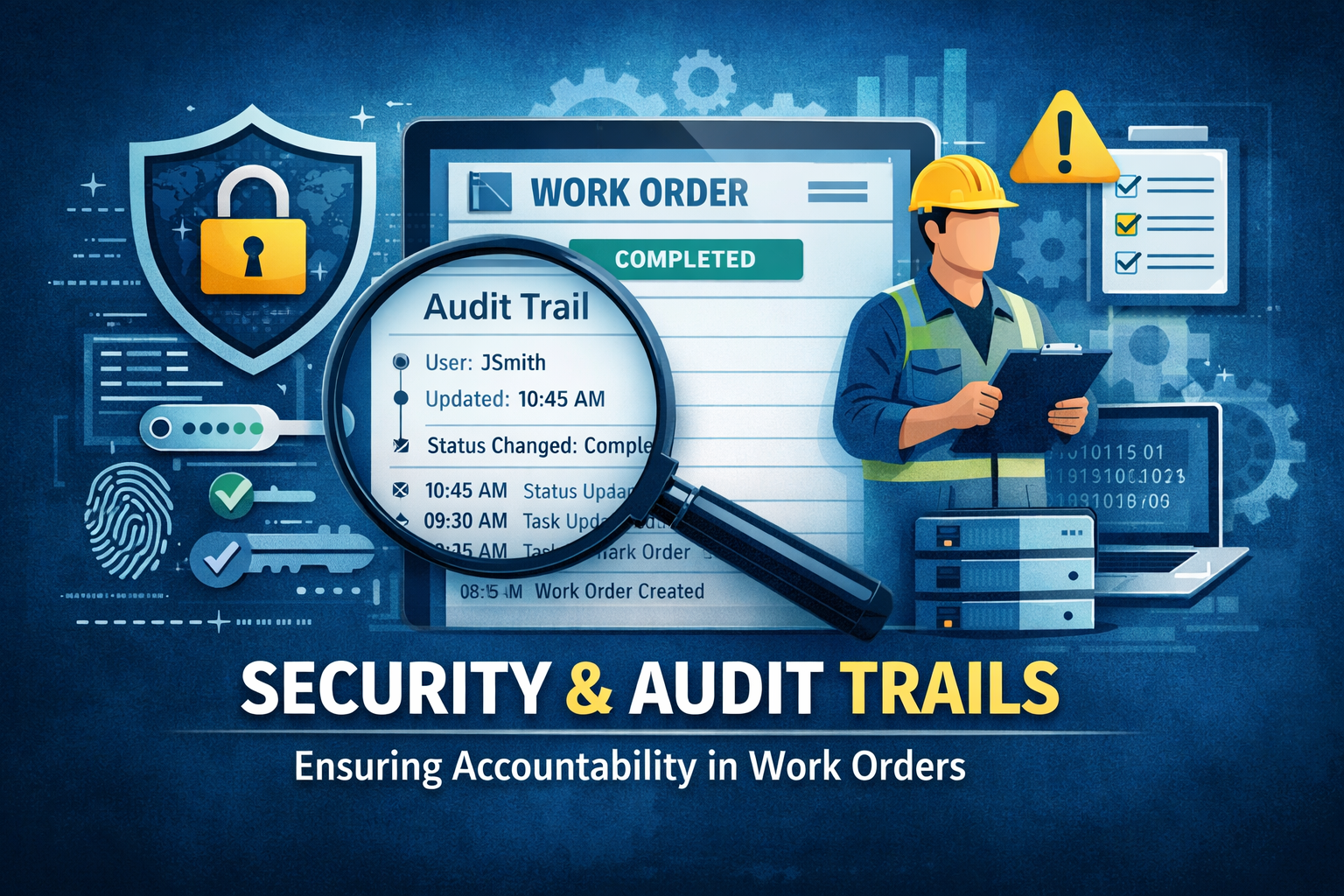
Conversely, audit trails offer a timeline of every action associated with a work order. They keep track of who made the work order, who modified it, and what modifications were made. Work orders become dynamic, verifiable histories at this level of traceability. It enables managers to piece together incidents and pinpoint the underlying causes of problems.
Security and audit trails work together to establish a system of checks and balances. They promote transparency while discouraging illegal activity. They become essential instruments for both operational control and strategic decision-making when they are applied successfully.
The Role of Audit Trails in Strengthening Accountability
In order to guarantee accountability throughout work order procedures, audit trails are essential. They produce an open record that deters carelessness and deliberate wrongdoing. Employees follow established protocols more closely when they know the system monitors their actions. This behavioral shift alone can significantly improve operational discipline.
Audit trails facilitate quicker problem solving in addition to deterrent. For instance, managers can examine the audit trail to determine whether improper execution or inadequate documentation was the cause of an early failure of a maintenance task. This realization lowers downtime and stops issues from happening again.
Additionally, audit trails help ensure that industry rules are followed. Industries like manufacturing, energy, and healthcare frequently need thorough documentation of maintenance operations. Organizations can prove compliance during inspections or audits if they have a well-maintained audit trail. It lowers the possibility of fines and harm to one’s reputation.
Key Security Measures for Work Order Management
Role-based access control (RBAC) is the first step toward effective security in work order management. This strategy guarantees that users can only access data that is pertinent to their responsibilities. For example, when managers approve or close work orders, technicians may update task statuses. This division of duties lowers the possibility of unapproved modifications.
Strong authentication procedures are another crucial precaution. By asking users to authenticate themselves using various methods, multi-factor authentication (MFA) provides an additional layer of security. This strategy greatly lowers the possibility of unwanted access, particularly in cloud-based applications.
Additionally, data encryption is essential for safeguarding sensitive data. To avoid interception or manipulation, organizations must encrypt data while it’s in transit as well as while it’s at rest. Routine security audits and vulnerability assessments identify and fix potential flaws, further strengthening the system. When combined, these steps provide a strong security framework for managing work orders.
Challenges in Implementing Audit Trails and Security
Despite its advantages, there are a number of difficulties in putting audit trails and security measures into practice. System complexity is one prevalent problem. For reporting, asset management, and maintenance, organizations frequently employ a variety of tools. It can be difficult and resource-intensive to integrate audit trails across these platforms.
Data overload is another issue. Large amounts of data are produced via audit trails, which, if improperly maintained, can overwhelm teams. Organizations may find it difficult to get significant insights in the absence of efficient filtering and analytics. This may result in underutilization and lower the perceived value of audit trails.
Another major obstacle is user resistance. Security measures may seem burdensome or invasive to employees. Adoption rates may decline if companies don’t clearly convey the advantages. A well-rounded strategy that incorporates technology, training, and change management is needed to address these issues.
Best Practices for Enhancing Accountability
To optimize the benefits of security and audit trails, organizations can implement a number of best practices. First, they should consider usability and clarity while designing audit trails. Logs should be simple to read, search, and evaluate. This guarantees that interested parties can obtain the information they require in a timely manner.
Second, companies want to put in place automated warnings for important occurrences. When someone alters a finished work order or circumvents approval protocols, for instance, the system can alert supervisors. These real-time notifications lower the possibility of mistakes and allow for proactive response.
Frequent training sessions are also essential. Workers need to know how to operate the system and why accountability is important. When users see the direct impact of their actions on operational outcomes, they are more likely to embrace security measures.
Lastly, companies should use analytics to learn from audit trails. Predictive maintenance plans can be supported by sophisticated tools that can spot trends and abnormalities. As a result, audit trails become tools for ongoing improvement rather than just compliance.
Conclusion: Building a Culture of Transparency and Trust
Work order systems are not the only thing that security and audit trails safeguard. They establish a culture of trust, responsibility, and openness. Organizations can lower risks and increase operational efficiency by making sure that every action is traceable. Additionally, they acquire the self-assurance to make data-driven choices.
But technology is insufficient on its own. Organizations must match their personnel, procedures, and policies with their security goals. They have to spend money on communication, training, and ongoing development. This all-encompassing strategy guarantees that security measures and audit trails provide long-term benefits.
The significance of accountability will only increase as work order systems develop further. Businesses that prioritize security and audit trails today will be better prepared to handle tomorrow’s challenges.

Introduction: Why Accountability in Work Orders Matters
The core of facility management, service operations, and maintenance is work orders. They record tasks, assign responsibility, and track completion time. However, work orders are susceptible to mistakes, fraud, and manipulation in the absence of robust security controls and audit trails. Small accountability gaps can lead to costly operational failures or compliance issues, which organizations often underestimate.
Modern organizations operate in conditions that demand transparency. Internal governance, customer expectations, and regulatory requirements drive the need for accurate, traceable records. This foundation is provided by security controls and audit trails, which document each activity made on a work order. They make sure that every modification leaves a digital trace.
This article shows how security and audit trails strengthen work order accountability. It also looks at the difficulties that organizations encounter and provides useful implementation solutions.
Understanding Security and Audit Trails in Work Order Systems
In work order systems, security refers to the rules and tools that shield data from tampering or illegal access. Data encryption, role-based permissions, and user authentication are all part of it. Work orders can only be created, modified, or closed by authorized personnel thanks to these methods. Organizations run the danger of operational irregularities and data breaches in the absence of such safeguards.
Conversely, audit trails offer a timeline of every action associated with a work order. They keep track of who made the work order, who modified it, and what modifications were made. Work orders become dynamic, verifiable histories at this level of traceability. It enables managers to piece together incidents and pinpoint the underlying causes of problems.
Security and audit trails work together to establish a system of checks and balances. They promote transparency while discouraging illegal activity. They become essential instruments for both operational control and strategic decision-making when they are applied successfully.
The Role of Audit Trails in Strengthening Accountability
In order to guarantee accountability throughout work order procedures, audit trails are essential. They produce an open record that deters carelessness and deliberate wrongdoing. Employees follow established protocols more closely when they know the system monitors their actions. This behavioral shift alone can significantly improve operational discipline.
Audit trails facilitate quicker problem solving in addition to deterrent. For instance, managers can examine the audit trail to determine whether improper execution or inadequate documentation was the cause of an early failure of a maintenance task. This realization lowers downtime and stops issues from happening again.
Additionally, audit trails help ensure that industry rules are followed. Industries like manufacturing, energy, and healthcare frequently need thorough documentation of maintenance operations. Organizations can prove compliance during inspections or audits if they have a well-maintained audit trail. It lowers the possibility of fines and harm to one’s reputation.
Key Security Measures for Work Order Management
Role-based access control (RBAC) is the first step toward effective security in work order management. This strategy guarantees that users can only access data that is pertinent to their responsibilities. For example, when managers approve or close work orders, technicians may update task statuses. This division of duties lowers the possibility of unapproved modifications.
Strong authentication procedures are another crucial precaution. By asking users to authenticate themselves using various methods, multi-factor authentication (MFA) provides an additional layer of security. This strategy greatly lowers the possibility of unwanted access, particularly in cloud-based applications.
Additionally, data encryption is essential for safeguarding sensitive data. To avoid interception or manipulation, organizations must encrypt data while it’s in transit as well as while it’s at rest. Routine security audits and vulnerability assessments identify and fix potential flaws, further strengthening the system. When combined, these steps provide a strong security framework for managing work orders.
Challenges in Implementing Audit Trails and Security
Despite its advantages, there are a number of difficulties in putting audit trails and security measures into practice. System complexity is one prevalent problem. For reporting, asset management, and maintenance, organizations frequently employ a variety of tools. It can be difficult and resource-intensive to integrate audit trails across these platforms.
Data overload is another issue. Large amounts of data are produced via audit trails, which, if improperly maintained, can overwhelm teams. Organizations may find it difficult to get significant insights in the absence of efficient filtering and analytics. This may result in underutilization and lower the perceived value of audit trails.
Another major obstacle is user resistance. Security measures may seem burdensome or invasive to employees. Adoption rates may decline if companies don’t clearly convey the advantages. A well-rounded strategy that incorporates technology, training, and change management is needed to address these issues.
Best Practices for Enhancing Accountability
To optimize the benefits of security and audit trails, organizations can implement a number of best practices. First, they should consider usability and clarity while designing audit trails. Logs should be simple to read, search, and evaluate. This guarantees that interested parties can obtain the information they require in a timely manner.
Second, companies want to put in place automated warnings for important occurrences. When someone alters a finished work order or circumvents approval protocols, for instance, the system can alert supervisors. These real-time notifications lower the possibility of mistakes and allow for proactive response.
Frequent training sessions are also essential. Workers need to know how to operate the system and why accountability is important. When users see the direct impact of their actions on operational outcomes, they are more likely to embrace security measures.
Lastly, companies should use analytics to learn from audit trails. Predictive maintenance plans can be supported by sophisticated tools that can spot trends and abnormalities. As a result, audit trails become tools for ongoing improvement rather than just compliance.
Conclusion: Building a Culture of Transparency and Trust
Work order systems are not the only thing that security and audit trails safeguard. They establish a culture of trust, responsibility, and openness. Organizations can lower risks and increase operational efficiency by making sure that every action is traceable. Additionally, they acquire the self-assurance to make data-driven choices.
But technology is insufficient on its own. Organizations must match their personnel, procedures, and policies with their security goals. They have to spend money on communication, training, and ongoing development. This all-encompassing strategy guarantees that security measures and audit trails provide long-term benefits.
The significance of accountability will only increase as work order systems develop further. Businesses that prioritize security and audit trails today will be better prepared to handle tomorrow’s challenges.